
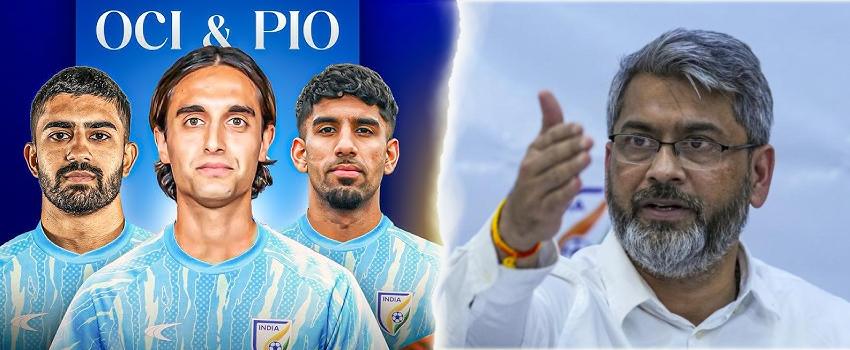
Indian football? It’s often frustrating. India national team, the Blue Tigers, sees fluctuating FIFA rankings, underperforms way too often. Honestly, India must do better – no, India deserve better. Now, the All India Football Federation (AIFF)’s seriously pushing to bring in Overseas Citizen of India (OCI) cardholders. Intriguing? Sure. But the real question nagging at Indians: is this a genuine game-changer, or just a shiny distraction from decades-old, entrenched problems holding Indian football back? Let’s just unpack what’s going on.
The OCI Push: A Quick Fix?
The AIFF’s desperate for OCI players. Why? Simple: fix our national team’s scoring drought, emulate successful Asian nations. They don’t just want results; they need ’em yesterday.


Why the OCI Obsession Now?
Blue Tigers? They just can’t score. Seriously, natural strikers are nonexistent, and India’re leaning way too hard on an aging Sunil Chhetri – even AIFF President Kalyan Chaubey admits it. OCIs, it seems, are the crucial missing piece. Plus, it mirrors what worked for Bangladesh or Pakistan; those teams quickly boosted their ranks with diaspora talent. Oh, and the fans! Public pressure for immediate improvement really fuels this OCI buzz, big time.
OCI Cards: The Eligibility Minefield.
Okay, an OCI card grants residency rights. But citizenship? Nope. That’s precisely where sports eligibility turns into a real mess. A stubborn 2008 Ministry directive still bars OCI/PIO players; only Indian passport holders can officially represent us.
We hear about ongoing talks, sure (Hindustan Times, Sportstar, May-June 2025 hint at these). Yet, India simply doesn’t allow dual citizenship. Big dilemma for players like Yan Dhanda or Danny Batth, right? Giving up their current passports could absolutely tank their European careers. Still, AIFF President Kalyan Chaubey confirms they’ve contacted 33 OCIs. Some are working on status; others are literally wrestling with the legal maze.
Why Attracting OCI Players May Not Solve Indian Football’s Main Problems
Despite any quick wins, plenty in Indian football look at the OCI push with deep skepticism. Why? Because they argue it just won’t fix the real, systemic issues.
The OCI Push: A True Band-Aid?
OCI inclusion? Purely a short-term “band-aid” for many. It diverts focus from the core rot, looks good on the surface – but leaves deep-seated problems untouched. A massive concern is domestic complacency. Seriously, if we’re always looking outside, will our own academies even bother investing in Indian-born players? This already harms existing passport holders who struggle for game time. Utterly demoralizing, frankly, for those young talents… a real gut punch.
What Are Experts & Former Players Saying?
Our skepticism? It’s widely shared. Influential figures everywhere echo it. Our former captain, Bhaichung Bhutia, for instance, absolutely tears into the AIFF, arguing their OCI focus totally ignores the system’s “rotten” core. Then there’s Shaji Prabhakaran – a former AIFF general secretary, and listen, he admits OCIs might offer a “short-term lift.” But he’s adamant: long-term structural development? That’s the only real game-changer here.
And the fans? Well, polls (Times Now, May 2025, for instance) show support for OCIs hovering around 73%. Sure, they’re hungry for quick improvements – who isn’t, right? Yet, dig a little deeper, and you’ll find a profound desire for broader reforms. Most fans want both, obviously, but they definitely know where real, lasting change comes from.
The Real Hurdles: Systemic Problems Ignored in Indian Football Development
So, the real hurdles? Indian football’s biggest challenges are deeply systemic: weak grassroots, inconsistent coaching, flawed league structures, and governance issues. They’ve stifled growth for way too long – that’s the truth.
Why Are Grassroots Programs Still So Weak?
India severely lacks truly quality academies, effective scouting, and competitive youth structures. Underfunded initiatives, particularly in rural areas, mean raw talent often just… vanishes. Undiscovered. It’s a heartbreaking systemic failure to nurture talent, plain and utterly simple.
Coaching Quality: Is That the Bottleneck?
What’s more, frequent national team coaching changes – and you know, even Times Now points this out – they just create infuriating inconsistency. What happens then? Players truly struggle to build any kind of deep tactical understanding. They’re constantly adapting to some new playbook, never quite settling or mastering one. And this non-stop upheaval? It just absolutely decimates any chance of long-term development.
The ISL: All Flash, No Foundation?
Look, the ISL certainly brought sizzle and much-needed visibility. No denying that. But it’s also, honestly, a “closed circuit.” The biggest gripe, as Ranjit Bajaj, for instance, mentioned to India Today? It’s the stark lack of promotion and relegation. And that absence? It just absolutely chokes competitive depth and incentive. Then, the whole over-reliance on foreign players… that genuinely eats up precious playing time for our own Indian forwards. Inflated domestic salaries can reduce ambition for overseas opportunities. The ISL hasn’t truly sparked a competitive ecosystem or developed enough domestic talent.
Are AIFF’s Governance Issues Stifling Progress?
The AIFF, let’s just be brutally honest, has a bumpy track record. Remember their 2022 FIFA ban for “external interference”? That was a huge black eye. Allegations of political influence tainting merit-based decisions? They constantly erode trust. With decisions often feeling totally opaque – thanks to zero transparency and accountability – progress just crawls. If the governing body isn’t transparent and merit-focused, the entire system pays. Instability simply suffocates new ideas.
Is Age Fraud Still a Problem in Indian Football?
And player opportunities – guess what? Corruption still impacts them far too often. Age fraud, for one, runs rampant at youth levels. Kids registering under false ages just to get an unfair edge? It utterly destroys fair competition and truly hurts genuine talent. So, picture this: a hardworking, genuinely honest young player. What about their path? Blocked. Absolutely blocked. By outright cheats, by opaque systems where money, sadly, just talks so much louder than any sheer ability. It’s utterly soul-crushing, pushing away dedicated players. Honestly, it’s just heartbreaking.
Infrastructure and Exposure: Where Do We Even Start?
Then, you’ve also got the basic infrastructure and exposure. That’s another big one. Many stadiums are outdated, frankly lacking proper facilities. Training grounds often feel like they’re from another era. And critically, India national team rarely gets high-level international friendlies. Without decent pitches, modern gyms, or consistent top-tier competition, honestly, how can Indian players ever truly prepare for the elite level?
Beyond OCI: Charting Indian Football’s Sustainable Future
For Indian football to achieve lasting success… well, it’s plain and simple: AIFF need a proper, long-term strategy. One that really addresses fundamental deficiencies. Attracting OCI players? That’s fleeting hope, absolutely. But genuine progress? Ultimately, it demands a truly holistic roadmap. No quick, easy shortcuts this time, okay?
So, strengthening grassroots and youth development?
This is, hands down, the absolute core. It means AIFF’ll need massive investment – in nationwide youth academies and age-group leagues. We’re definitely talking about bringing in government and corporate partnerships here, too.
Robust scouting must reach untapped rural talent. Get football into school curricula – that expands the talent pool. And critically, standardized, high-quality coach education with clear certification is essential for a strong coaching base.
What Needs to Change in Our Domestic Leagues?
India’s domestic leagues? They simply have to change. We’re talking merit-based promotion and relegation across all tiers – that injects real competition, giving clubs a clear path based on performance. Also, review foreign player quotas. We need more playing opportunities for Indian talent. And clubs absolutely need financial viability and sustainability for long-term investment.
Fixing AIFF Governance and Accountability: Where Do We Start?
As for the AIFF, they simply must be a beacon of transparency and good governance. This means implementing decisions – merit-driven ones, mind you – at every single level. We need to ensure genuine autonomy from external interference. Tackle corruption head-on, no compromises. A clear, long-term strategic plan isn’t just important; it’s the absolute foundation for a consistent vision.
Why Prioritize Coach Education and Player Welfare?
Invest heavily in advanced training for Indian coaches – vital! We need more coaches who truly grasp modern tactics, sports science, and the mental game. Building a strong pool of local coaches is much better long-term. Focus on comprehensive sports science, nutrition, and mental conditioning for players. Crucially, foster an environment that encourages players to chase overseas opportunities; exposure abroad brings immense benefits back home.
How Can India Boost International Engagement?
Finally, let’s get smart and proactive with international schedule. Arrange more high-level friendlies. Ensure Indian national teams play in truly competitive tournaments regularly; that’ll test players against the best. This consistent exposure? Absolutely priceless. Collaborating with established footballing nations for knowledge exchange and player development can dramatically speed up our learning curve.
Also Read: Is Chelsea’s €56 Million Wonderkid Ready to Dominate the FIFA Club World Cup?
Conclusion: The Path Forward for Indian Football
Look, OCI players offer some exciting short-term improvements, sure. But let’s be clear: it won’t fix India’s deep-rooted problems. Real strength? That demands profound, multi-pronged transformation. We’re talking fixing grassroots, overhauling domestic leagues, reforming governance, seriously investing in coaching, and focusing on holistic player development. It’s a marathon, absolutely not a sprint. This requires sustained commitment – from the AIFF, clubs, government, and all of us passionate fans – to build a robust, competitive, and genuinely sustainable footballing future.
