
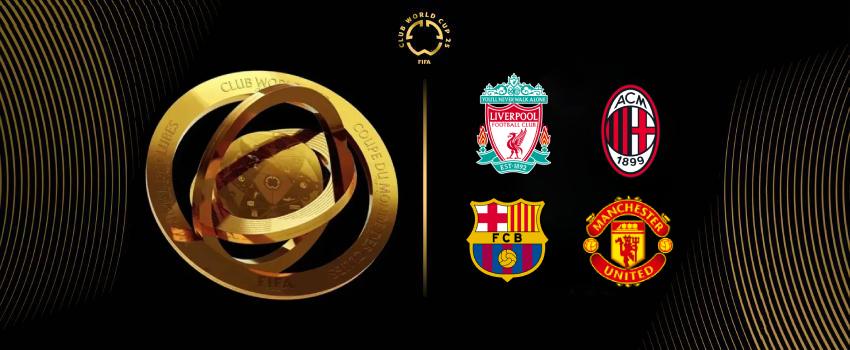
FIFA expanded the FIFA Club World Cup to 32 teams. More global action, more big names. But some European giants, worth billions, are missing. It’s puzzling.
Why aren’t these financial heavyweights in the FIFA Club World Cup 2025? I’ve compared club valuations with the participant list. This list might surprise you. It shows football’s changing landscape.


The New FIFA Club World Cup Reality: Quick Facts
The FIFA Club World Cup 2025 is a new 32-team tournament, every four years. A massive undertaking, a huge cash cow for FIFA.
Qualification isn’t simple. UEFA (Europe) spots go to Champions League winners (2021-2024) and high-ranked clubs from a four-year system. Win Europe’s biggest trophy, or consistently perform at the top. It didn’t work for everyone.
How We Ranked Them: Following the Money
To find the “most valuable” absentees, I used recent, reputable club valuations (Forbes, Transfermarkt). These sources consider revenue, brand, squad value, and stadium assets. They give a snapshot of financial might.
I then cross-referenced that with the official list of 2025 tournament teams. The results paint an interesting picture.
The Unseen Giants: Top 10 Most Valuable Football Clubs Not at CWC 2025
Here are the clubs with massive financial muscle and huge fanbases that missed the USA party. It’s almost unbelievable.
1. FC Barcelona (Estimated Value: €1.09 billion)
Barcelona, a global football giant, is sitting this one out. Why? They didn’t win the Champions League (2021-2024), and their UEFA coefficient ranking wasn’t enough for a non-champion spot. A bitter pill for fans. It shows how quickly things change.
2. Liverpool FC (Estimated Value: €1.08 billion)
Another shocker! Liverpool, a consistent Champions League force, missed the cut. They didn’t lift the Champions League trophy in the qualification window (2021-2024). Their UEFA ranking points weren’t enough either. For a club with such history, their absence is jarring. Hear those sighs from Merseyside?
3. Manchester United (Estimated Value: €818 million)
Manchester United, a massive global brand, isn’t in the Club World Cup. Less surprising for those following their struggles. United haven’t consistently competed at the Champions League top level, let alone won it. Their ranking points weren’t there. Legacy alone doesn’t guarantee entry. Money talks, but recent performance screams louder.
4. Tottenham Hotspur (Estimated Value: €804.9 million)
Tottenham, another Premier League giant, is also absent. They’ve been a Champions League regular but haven’t won it. They also didn’t accumulate enough ranking points. They were close to glory, but not close enough for this competition. Tough break for a club with big ambitions.
5. Brighton & Hove Albion (Estimated Value: €703.4 million)
Brighton? More valuable than some traditional giants? This highlights their incredible growth, smart business, and Premier League success. They impressed domestically and had a taste of Europe. But it wasn’t enough for a CWC spot. They haven’t won the Champions League, and their European ranking isn’t high enough yet. A sign of their rising stature, but also the tournament’s high bar.
6. Newcastle United (Estimated Value: €642.88 million)
Newcastle, with wealthy ownership, is a club on the rise. They’ve invested heavily and had a Champions League campaign. But they didn’t win Europe’s top prize in the window. Their historical UEFA ranking points weren’t enough. They’re building, but not quite ready for this global stage. Patience, Geordies.
7. Aston Villa (Estimated Value: €566.8 million)
Aston Villa’s resurgence under Unai Emery was fantastic, leading to Champions League qualification. But their European success came after the 2025 Club World Cup qualification window. They didn’t win the Champions League in the specified years, and their UEFA ranking points weren’t enough. Bad timing. A shame for fans who’d love to see them on the world stage.
8. Sporting CP (Estimated Value: €521.1 million)
Sporting CP, a Portuguese powerhouse, consistently competes domestically and in Europe. But like many non-Champions League winners, they didn’t accumulate enough UEFA ranking points over the four-year cycle. They’re a valuable club with history, but the new CWC format is brutal for those outside Europe’s elite winners.
9. RB Leipzig (Estimated Value: €505.7 million)
RB Leipzig, a newer German force, is a Champions League regular. Known for smart recruitment and exciting football. Yet, despite consistent European presence, they haven’t won the Champions League, nor did their ranking points secure a spot. It shows the sheer competition for UEFA slots.
10. AC Milan (Estimated Value: €490.7 million)
Rounding out the list is Italian giant AC Milan. A club with incredible European pedigree, on a journey back to the top. They had Champions League appearances but didn’t win the trophy in the qualification period. Their UEFA ranking points weren’t enough. For a club with their history, watching from the sidelines must feel odd.
A Note on Valuations: Beyond the Trophy Cabinet
Why do clubs like Brighton, Newcastle, and Aston Villa appear on this list, while other huge names might be lower or absent? It’s a fair point. Modern football club valuations go beyond just who won the last trophy.
Here’s the deal:
- The Premier League Factor is HUGE: Premier League broadcasting deals are enormous. Even lower-ranked Premier League clubs generate more revenue than top clubs in other leagues. More revenue means higher valuation. Brighton, Newcastle, and Aston Villa benefit immensely from being in England’s top flight.
- It’s a Business Valuation: “Most valuable club” rankings are business assessments. They look at a club’s financial health and potential, not just on-pitch success. Key factors include:
- Revenue Streams: TV rights, commercial sponsorships, merchandise, matchday income. Premier League clubs excel here.
- Brand Value & Global Reach: How marketable is the club worldwide?
- Squad Value: Collective market value of players.
- Ownership & Investment: New, wealthy owners (like Newcastle’s PIF) signal huge future potential, boosting value.
- Financial Health & Business Model: Clubs like Brighton are praised for smart, sustainable models, including profitable player development. This adds to their value.
- Where Arsenal and Napoli Fit In:
- Arsenal: They are one of the most valuable clubs globally! Some Forbes 2025 lists rank Arsenal 8th ($3.4 billion), above Brighton, Newcastle, and Aston Villa. Different valuation methods yield different rankings. Arsenal is a financial powerhouse. Their CWC absence is due to qualification criteria, not lack of value.
- Napoli: Despite winning Serie A, Serie A’s financial landscape doesn’t match the Premier League. Napoli’s revenue, commercial deals, and market reach are generally lower than many Premier League clubs. This impacts their overall valuation.
These valuations reflect financial power, strategic management, and the economic might of the league a club competes in, often more than just recent trophy hauls.
Why Did They Miss Out? A Deeper Look
So, what’s the common thread? Why did these valuable, household-name clubs fail to qualify for the FIFA Club World Cup 2025? It boils down to a few key factors.
The Champions League Hurdle: Win It or Bust (Mostly)
The clearest path for European clubs was winning the UEFA Champions League (2021-2024). No trophy meant relying on the ranking pathway. For Barcelona, Liverpool, and Arsenal, no UCL win in that window was a huge missed opportunity. Brutal reality: domestic success isn’t always enough for this global stage.
The Ranking Pathway Conundrum: Consistency is King
UEFA allocated spots based on a four-year club ranking. This rewards consistent Champions League performance. Manchester United and Tottenham, despite high valuations, lacked sustained deep UCL runs for enough points. It’s about performing well in the UCL, year after year. Early exits proved costly.
Domestic Focus vs. European Glory: A Balancing Act?
Did some clubs prioritize domestic success over deep European runs? Or did the sheer grind of leagues (Premier League!) make consistent UCL performance harder? It’s a delicate balance. For these clubs, the scales tipped away from CWC qualification.
The “Unlucky” Ones: Timing is Everything
Sometimes, it’s just bad timing. Aston Villa’s fantastic season for Champions League qualification fell outside the CWC window. They’re performing brilliantly now, but criteria looked at past performance. Unfair, perhaps, but rules are rules. Feel their frustration? So close, yet so far.
The Ripple Effect: What Their Absence Means
The absence of these giants from the FIFA Club World Cup 2025 will have consequences.
For the Tournament Itself: Less Star Power, More Diversity?
Missing Barcelona, Liverpool, and Manchester United means less immediate star power for casual fans. But it opens doors for other strong European teams (Salzburg, Benfica, Porto, Atlético Madrid, Juventus, Dortmund, Inter Milan) who qualified via ranking. More diverse, perhaps, but does it dilute the “wow” factor? Pub debate, I suppose.
For the Clubs Themselves: Missed Revenue, Prestige, and a Wake-Up Call?
For absent clubs, it’s a huge miss: significant revenue (fees, prize money, sponsorship). Plus, the prestige of a global title. Their absence could be a wake-up call. It emphasizes consistent European performance, not just domestic success. A missed opportunity to cement their global brand.
For Fans: Disappointment, But Renewed Focus?
Fans will be disappointed. Who wouldn’t want their team fighting for a world title? But it might shift focus back to domestic leagues and the Champions League. A renewed hunger to qualify next time. It’s strange watching a big tournament without your team.
Also Read: Beyond the OCI Card: Why Attracting Overseas Talent Alone Won’t Solve Indian Football’s Deep-Rooted Crisis
Conclusion: The Evolving Landscape of Club Football
The FIFA Club World Cup 2025 will be a spectacle. But the list of valuable clubs not competing tells a story. It shows the brutal reality of elite football: immense financial value and global recognition don’t guarantee every major tournament. Qualification is earned.
This expanded CWC reshapes the landscape. It emphasizes consistent European performance over a multi-year cycle. For these clubs, their absence is a stark reminder of increasing competition. It’s a marathon, not a sprint. Even the biggest names stumble. How will they respond? Will this recur? Time will tell.